
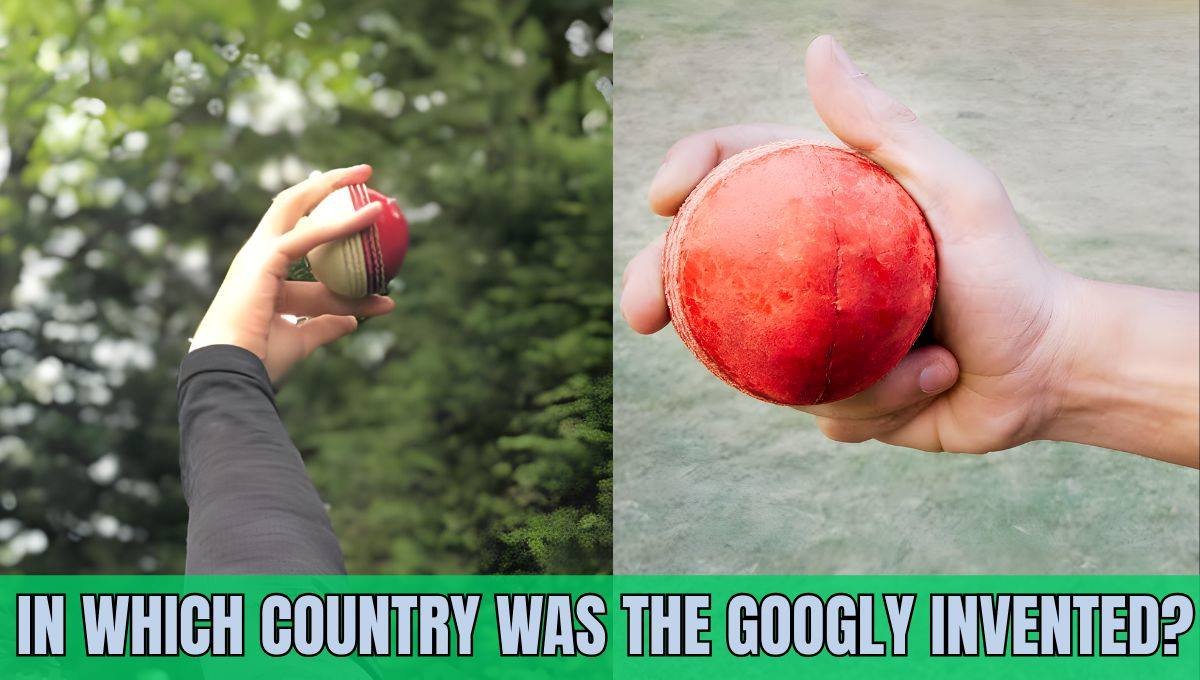
Googly is one of the famous and deceptive deliveries which are played in cricket. It is largely used in spin bowling by leg-spinners to deceive the batsman by imparting a spin in the other direction of a standard leg break. The use of the googly is an essential weapon in cricket at the international (International) and domestic level due to the bowler’s wicket taking skills over the years. This article will provide complete information about In which country was the googly invented? Is history, its effects, the right way to bowl it, what to look out for, and some notable examples of bowlers who have excelled with this delivery.
What Is a Googly ball in Cricket?
A ‘googly’ is a particular ball delivered by a leg-spinner which is bowled in the opposite direction of a regular leg-spin bowler. A regular leg break is an action of the right arm leg spinner bowling to a right-handed batsman, where the ball was bowled from the leg side and then moved towards the off side. But a Googly ball goes from offside to leg side. The best part of the googly is just that it is deceived. The delivery is very similar to a normal leg-spinner delivery and the batsman can misread the ball/arch early.
The googly can be very misleading for the batsman as he thinks the ball will spin in one direction when actually it goes in the opposite direction and therefore often causes wickets. It is regarded as one of the best variations in spin-bowling.
Leg-spinners are not an all-round content bowler and will normally come with a bowler change where they can take delivery of the googly. A googly is a disguised ball and when it is bowled properly can turn a match.
In Which Country was the Googly Invented?
Googly ball was invented by an Englishman, Bernard Bosanquet, in the early part of the 1900s. The spinning method with Bosanquet found the delivery. He found that if he altered the wrist he moved when releasing the ball, he could create a counter-spinning motion, as opposed to spinning from a leg break. His invention was soon utilized with the batsman finding it very difficult to pick the ball’s direction after it was bowled. Eventually, googly evolved to be a vital attribute of legs-spinners across the globe. The approach was totally new, as it changed the face of spin bowling in cricket and ushered in another dimension to tactical bowlers. In the present scenario, almost all successful leg spinners make the googly a part of his armory.
How Twisti-Twosti inspired the invention of the Googly
The invention of the googly has one of the most interesting stories in cricket history. The idea for the delivery came from a popular parlor game known as “Twisti-Twisti,” which consisted of trickily bouncing and spinning a tennis ball around. The concept of the googly was uncovered in the late 1890s by English cricketer Bernard Bosanquet when playing this game.
In Twisti-Twisti, players would try to make the ball bounce in an unpredictable manner to make it impossible for others to make accurate decisions on the ball’s movement. With wrist variations, Bosanquet found that he could spin the ball in the other direction with a bowling ball using a similar action to that of a normal leg-break. This eventually gave birth to the googly.
Bosanquet took their cricket lessons and then played the variation in a match. It was extremely difficult for the batsmen to read as the delivery appeared to be a normal leg spin before turning the other way after pitching. In this regard, the usefulness of the googly became an important landmark in cricket, especially in spin bowling and it shook the world of cricket.
Soon the googly became a revolution in cricket as it enabled the leg-spinner to have deception and unpredictability while bowling. In the years that followed, several great spinners on the other hand further developed the delivery, making it one of the most threatening weapons in modern day cricket.
Why Is the Googly So Effective?
One of cricket’s most dangerous deliveries is the googly due to the confusion it causes for the batsman.
1. Tricks the batsman out of his ball
Of the two types of spin bowlers, most batsmen can read finger spin, because they can see the wrist movement and the angle of the seam. A googly closely resembles a leg spin delivery, but is different after it is delivered. This direction change of spin is often not expected by the batsman, compelling errors.
2. It Creates Pressure
A batsman will get confused if he is unable to hit the ‘googly’, then he will not be sure with any ball. The psychological stress has an impact on the footwork, timing and shot selection. It can create a hell of a lot more difficulty when hitting the ball knowing that it is an attempt to deceive.
3. Helps in Taking Wickets!
Good well bowled googly can result into multiple dismissals including:
- Bowled
- LBW
- Caught behind
- Slip catches
- Short-leg catches
The googly is also commonly played in all types of cricket games due to its ability to take wickets.
4. Adds variation in Bowling
Batsmen can make sure of the deliveries without the variations. The googly complicates matters, making the spinner more of a threat. Modern T20 cricket particularly requires bowlers who often can take the batsmen unawares.
Top 10 Googly Bowlers in the World
| Bowler | Country |
| Rashid Khan | Afghanistan |
| Wanindu Hasaranga | Sri Lanka |
| Kuldeep Yadav | India |
| Adam Zampa | Australia |
| Adil Rashid | England |
| Shadab Khan | Pakistan |
| Yuzvendra Chahal | India |
| Maheesh Theekshana | Sri Lanka |
| Mitchell Swepson | Australia |
| Rehan Ahmed | England |
How to Bowl a Googly
Good technique, balance and wrist control are parameters needed to pack in a googly. It could be challenging at first for beginners, but with more practice, you get consistent.
Step 1: To hold the ball correctly
A similar grip is used for a googly to that of the leg-spin grip.
- Important Grip Points
- Position fingers (index and middle) on seam.
- The ringside hand should assist to create spin.
- Maintain the thumb in the normal ‘resting’ position close to the side of the ball.
- Don’t choke up on the ball.
A relaxed grip makes for smoother wrist movement and greater control.
Step 2: Always use the correct wrist position
- The key to bowling a googly is the wrist movement.
- Wrist Movement
- Turn the wrist towards the body as the ball is thrown.
- Your palm will need to briefly face towards your body.
- Smoothly flick the wrist for opposite spin.
This movement causes the ball to spin off away from the leg.
To bowl a consistent effective googly the wrists have to be properly flexible.
Step 3 – Rotate Your Body Smoothly
If the body is balanced and the shoulder can rotate, then there is additional spin and control.
- Key Body Movements
- Turn your shoulders naturally.
- Turn away from your front leg.
- Keep your body in balance during the action.
- Do not try to squeeze out any more speed.
While bowling a googly, it is more important to be accurate rather than fast.
Step 4: Move the Ball appropriately
Timing of release changes spin, bounce and direction!
- Release Tips
- Let your throw down close to the peak of your movement.
- Fingers endgrip firmly but relaxed.
- Keep your arms moving smoothly.
Rather than throwing fast, concentrate on spinning the ball. Loose deliveries can be a result of incorrect release.
Step 5: Perfect Follow Through
A stable follow-through ensures a repeating action and helps to avoid injuries.
- Follow-Through Tips
- Keep the arm going the same way as it would during the bowlers normal action.
- Maintain equilibrium post birth.
- Follow the ball through with the eyes.
Get ready for fielding opportunities.
In professional bowlers, they always have a smooth follow through which helps them in having control on the ball.
Mistakes to avoid during Googly Bowling
Even though some bowlers know how to bowl a googly, they still do googly mistakes sometimes. But it enhances the bowling performance to avoid some of these errors.
1. Wrong Wrist Position
The most crucial aspect of bowling a googly is the position of the wrist. Failure to allow the wrist to rotate inwards with release can result in the ball not spinning in the desired direction. Bad wrist movement can result in loss of turn, predictability and easy turn scoring appetite for the batsman(s). Wrist movement should be diligently practiced by bowlers to help them gain the much-needed control and spin.
2. Revealing the Variation Early
There are times when bowlers inadvertently provide clues by altering their body movement, arm speed etc prior to the delivery of a googly. Advanced players can easily detect the difference and make a preparation for it. Maintaining the same approach and natural body posture while ensuring that there is no change in the delivery’s speed is a crucial part as this will make the googly look exactly the same as the regular leg spin.
3. Bowling More Googlies than Should Be
The googly is most effective if the delivery can be used as a surprise delivery. When it is used frequently, it starts being looked upon as a cutting technique by the batters and so they change their approach while batting. Smart leg-spinners carefully balance googlies with leg-breaks to keep batsmen guzzling, and cause uncertainty.
4. Lack of Accuracy
Keep in mind that when it comes to bowling a googly, ACCURACY is of the utmost importance. When pitched low it can be easy to hit the ball for boundaries. Many players who want to become professionals spend too much time practicing spins and ignore line and length. Like other balls that require practice of excessive turn, bowlers should practice first to be consistent and control, and then use it to more effect in match-shot situations.
When is it appropriate to use a “Googly”?
- Against Right-Handed Batsmen: The googly is a very effective ball, as it tends to swing back towards the right hander as opposed to away, as with a leg break. Many batters think that googly will move in the off stumps direction, but they suddenly turn in the pad direction. This often provides opportunities for LBW dismissals, bowled wickets or inside edges.
- During Middle Overs: The middle overs is one of the best time to utilise the googly in Limited Overs cricket. In such a phase, players normally concentrate on rotating the strike and forming partnerships instead of being aggressive with the ball. An out of the blue googly may disrupt concentration, lead to a wrong shot and result in a vital wicket being secured.
- On Turning Pitches: Dry and spinning pitches are helpful in playing a googly because the surface enables the ball to grip and spin round sharply. The harshness of the track makes it even more difficult to determine which way the ball is spinning on rough tracks. With added movement after throwing, the ball becomes much more of a risk and much harder to control.
- After Regular Leg-Spin Deliveries: It is best used with some clever mixing of normal leg-spin deliveries, with a googly. If a batsman plays a few consistent leg breaks in quick succession then the next ball would be expected to do the same. So the emergence of an adiabatic googly at that juncture adds to the confusion and greatly improves the chances of taking a wicket.
Difference between Googly and Leg Spin
| Feature | Leg-Spin | Googly |
| Direction of Spin | Leg to off | Off to leg |
| Wrist Position | Standard outward rotation | Inward wrist rotation |
| Main Goal | Turn away from batsman | Surprise the batsman |
| Difficulty Level | Easier to control | Harder to master |
| Element of Surprise | Moderate | Very high |
Pros & Cons of the Googly Ball
| Pros | Cons |
| Excellent wicket-taking delivery | Difficult to master |
| Creates confusion for batsmen | Requires strong wrist control |
| Adds variety to bowling | Poor execution can lead to boundaries |
| Useful in all cricket formats | Overuse reduces surprise factor |
| Effective against attacking batters | Demands continuous practice |
Why Every Leg-Spinner Must Learn the Googly
It is essential for every leg-spinner to pick up the googly as it brings an element of surprise to his/her bowling. However, if there is no variation then it is easy for the batters to read the spin and lean confidently. A googly adds an element of surprise to a spinner’s ball as it swerves the other way to how normally bowled balls, and this often confuses batters. It also generates opportunities for wickets, through LBW, bowled and catches. A googly, with masking done properly can break partnerships, turn momentum and put an average spinner on the world of the high danger attacking bowler – even if it is used on an occasional basis.
Conclusion
Googly remains one of the intelligent and effective deliveries amongst all. The googly has been a crucial aspect of leg-spinners’ weaponry from the time of its invention by an even diminutive partnership of Bernard Bosanquet to the latest in T20 cricket. It can deceive batsmen, put them under pressure and cause wickets which makes it one of the most valuable variations that comes under the spin family.
While not easy to perfect, bowlers who practice regularly and get their count just right, along with their body positioning, can definitely improve on their googly as they become more successful in using it.
From beginner level to experts, learning how to bowl the googly can give your bowling their next level and help you be a scariest spinner on the field.
FAQs
A1. Googly: A spin of the ball in the opposite way to a normal leg-break ball.
A2. The googly was developed in England in the early 1900s by Bernard Bosanquet.
A3. It appears to be a normal leg-spinning delivery, but the ball spins clockwise, causing confusion among the batsmen.
A4. Some of the prominent bowlers are Shane Warne, Anil Kumble, Abdul Qadir and Rashid Khan.
A5. Yes, it does take control of the wrist, precision, evenness, and practice to be a successful bowler in the googly mode.
