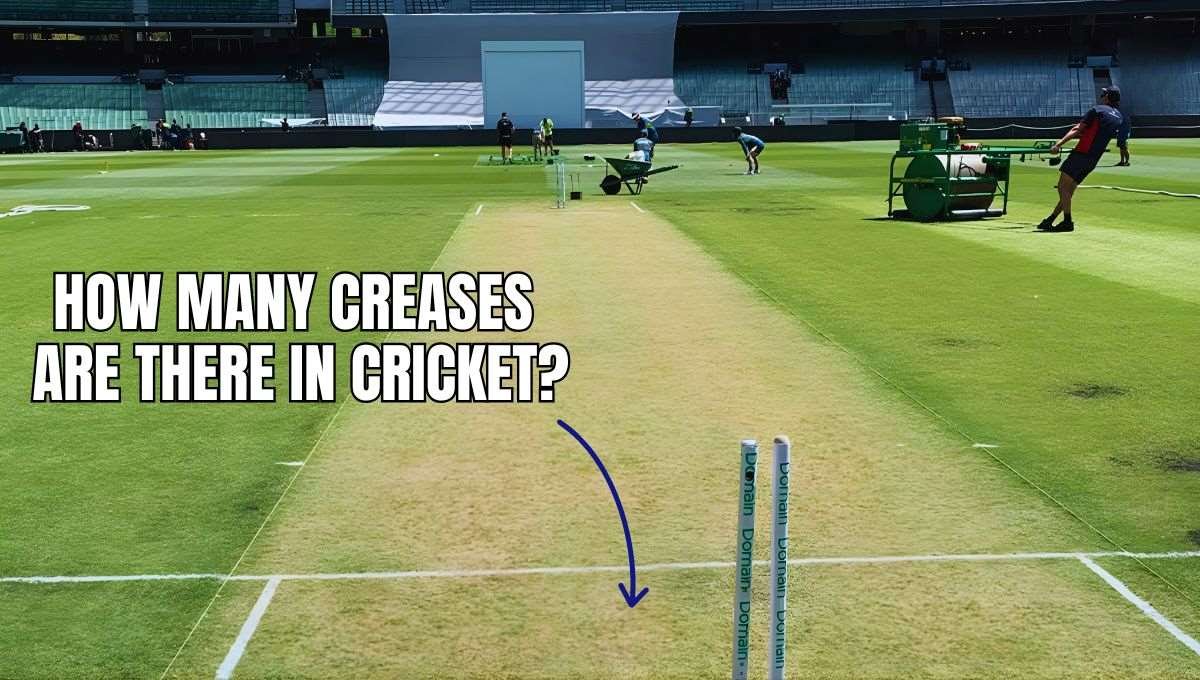
Cricket is a game of skill, strategy and precision. Each of the cricket pitches markings serve a purpose and one of the most important is the crease. Creases assist players in playing the game according to the rules and assist umpires in making correct decisions in a game. The crease is crucial whether a batter is trying to make a run or a bowler is aiming for a delivery. A popular question among cricket enthusiasts is, “How many creases are there in cricket?”. The answer may appear to be simple, but there are a variety of different types of creases that can help you understand many rules of the game. Creases have a bearing on some of the most important moments in cricket – from run-outs to no-ball decisions.
How many creases are there in Cricket?
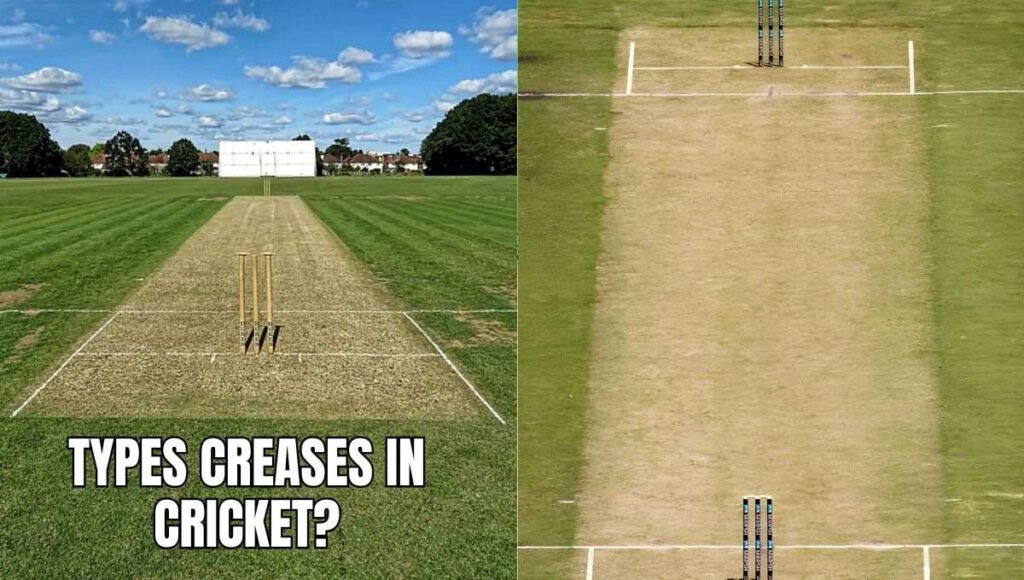
There are three types of crease in Cricket: Bowling Crease, Popping Crease and Return Crease. There is one bowling crease, one popping crease and two return creases at each end of the pitch. This means there will be four crease lines at one end of a pitch.
- The Popping Crease: The batting and front-foot no-ball line, marked 4 feet (1.22 meters) in front of the stumps.
- The Bowling Crease: The line aligned with the stumps, measuring 8 feet 8 inches (2.64 meters) in length.
- The Return Creases (2 per end): The lines perpendicular to the popping crease, marked 4 feet 4 inches (1.32 meters) on either side of the middle stump.
There are two ends on a cricket pitch and so there are 8 crease lines on the whole pitch. But when people talk about the types of creases, they are referring to the three main types of creases.
What Is a Crease in Cricket?
A white line that is marked on the cricket ground. These lines are drawn with care by staff at the Ground at the start of a match. Each crease has a specific function, and plays a part in maintaining fairness in the game.
Crease markings are used to check if a batter is safe inside the ground, if a bowler has bowled the ball correctly and if a dismissal is good. Many cricket rules would become hard to enforce if they didn’t have crease markings.
Players are under intense focus on crease throughout the game as it influences the decision making of bat, field and bowlers.
How Players Effectively use Creases?
Time-tested players use crease positions to reap benefits. Batters change their angle by moving around the crease. Some batters line up far back in the crease facing the rapid bowlers. Others run outside of the crease to take on the spinners. Bowlers also play with creative crease positions. Fast bowlers can come close to the return crease to form angles. Spin bowlers are seen to alter their delivery point without going beyond the lawful limit. In a game, these little changes can be the difference that makes a huge difference.
Standard Measurements of Cricket Creases
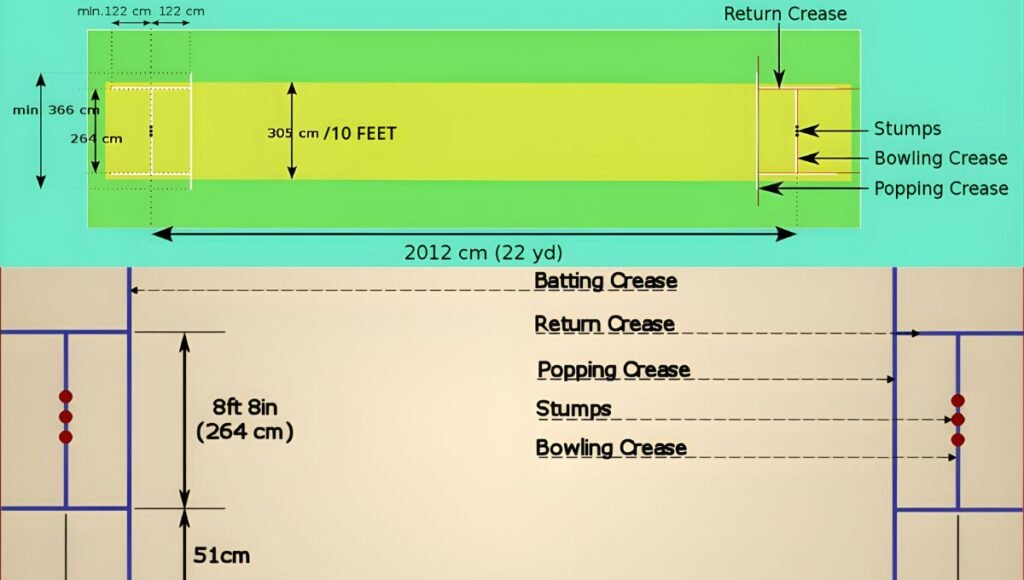
Cricket authorities use fixed measurements worldwide.
| Feature | Measurement |
| Pitch Length | 22 yards (20.12 m) |
| Bowling Crease Length | 8 ft 8 in (2.64 m) |
| Distance to Popping Crease | 4 ft (1.22 m) |
| Return Crease Distance | 4 ft 4 in (1.32 m) |
How Umpires Use Creases During Matches
Situations Where Umpires Check Creases
| Match Situation | Crease Used |
| Run-Out | Popping Crease |
| Stumping | Popping Crease |
| Front-Foot No-Ball | Popping Crease |
| Back-Foot No-Ball | Return Crease |
| Legal Delivery | Return and Popping Creases |
Creases in Different Cricket Formats
The crease system remains identical across all formats of cricket.
| Format | Same Crease Rules? |
| Test Cricket | Yes |
| ODI Cricket | Yes |
| T20 Cricket | Yes |
| Domestic Cricket | Yes |
| Club Cricket | Yes |
| School Cricket | Yes |
Common Misunderstandings About Cricket Creases
Many new fans misunderstand crease numbers.
Confusion Between Types and Lines
| Counting Method | Total |
| Types of Creases | 3 |
| Crease Lines at One End | 4 |
| Crease Lines on Entire Pitch | 8 |
Famous Moments Involving Creases
There are numerous iconic moments in cricket that are all about ‘crease’.
Dramatic run-outs and stumpings, relying on a few millimetres, are often remembered by fans. Batters often get to the crease at the last second in modern technology.
Bowlers also are prone to getting wickets, when their front foot steps over the popping crease by a whisker. The significance of crease markings is illustrated in these moments.
Interesting facts about cricket creases
- The same crease measurements are found on all cricket pitches.
- The popping crease has the greatest significance in run-out and stumping.
- Return creases aid in preventing unfair creases of the ball.
- The crease positions are checked regularly by television umpires.
- Players will tend to dive to get near the crease without getting hurt.
- A bowler may be dismissed by a no-ball when his foot placement causes the delivery to be a no-ball.
- The length of a cricket’s crease has been measured according to cricket laws for both domestic and international cricket.
Final Thoughts
Although the cricket creases appear to be just simple white lines, they have a huge role in the game. They assist the umpires to make clear decisions and assist players to abide by the guidelines of the game.
When asked, “How many creases are there in cricket?” the answer is, four crease lines in each end, one on the innings side and one on the bowler’s side, there are two return creases. A cricket pitch is divided into 2 ends; so there are 8 crease lines on the whole pitch. But there are only three creases recognised in cricket: the bowling crease, the popping crease and the return crease. These crease markings affect numerous pivotal situations such as runs out, stumping and no balls. That’s why all players, umpires, coaches and fans keep their eyes on them all the time in a cricket match.
FAQ’s
A1. The popping crease is a line in front of the stumps which the batter’s run-out/ stumping safe area.
A2. The area where the stumps are placed is called the bowling crease and is the yardstick used for the other crease measurements on the pitch.
A3. Return creases are used to make sure the bowler’s position is controlled while delivering the ball and to stop illegal angles when the ball is delivered.
A4. Yes, the official dimensions and markings of the crease are the same for all types of cricket – Test, ODI, T20 and domestic matches.