
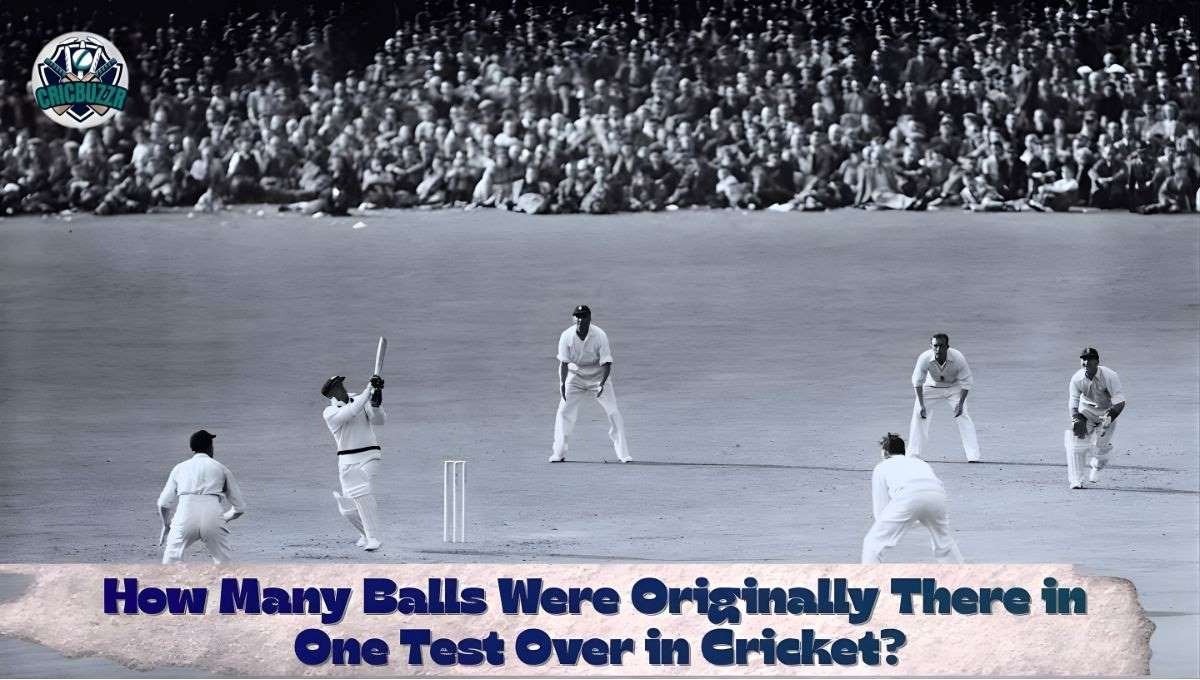
Cricket is a game that is highly historical, traditional and gradual in nature. Although the current form of cricket is guided by well stipulated rules, several issues about the game have evolved with time. How many balls were originally there in one Test over in cricket? is one of the most commonly asked and debated questions by the audience of the sport. This question may seem simple at first, but the answer reveals a fascinating journey through cricket’s early development, regional variations, and eventual global standardization. Understanding this evolution helps fans appreciate how Test cricket became the structured format we recognize today.
Understanding the Concept of an Over in Cricket
An over in the game of cricket is a series of bowling actions of the same bowler at one end of the pitch. The moment the necessary amount of valid balls is done, the over is said to be done and the next over is given by another bowler at the other end. This system aids in ensuring equity between the bat and the ball and equal conditions of being exposed to the conditions of pitch by both teams.
In contemporary Test cricket, an over contains six deliveries, which are legal. This was, however, not always true. The Laws of the game were not very strict in the early years of cricket regarding the number of balls to be in an over. Consequently, this led to the difference in the over length depending on the time period, country and local cricketing authorities.
How Many Balls Were Originally There in One Test Over?
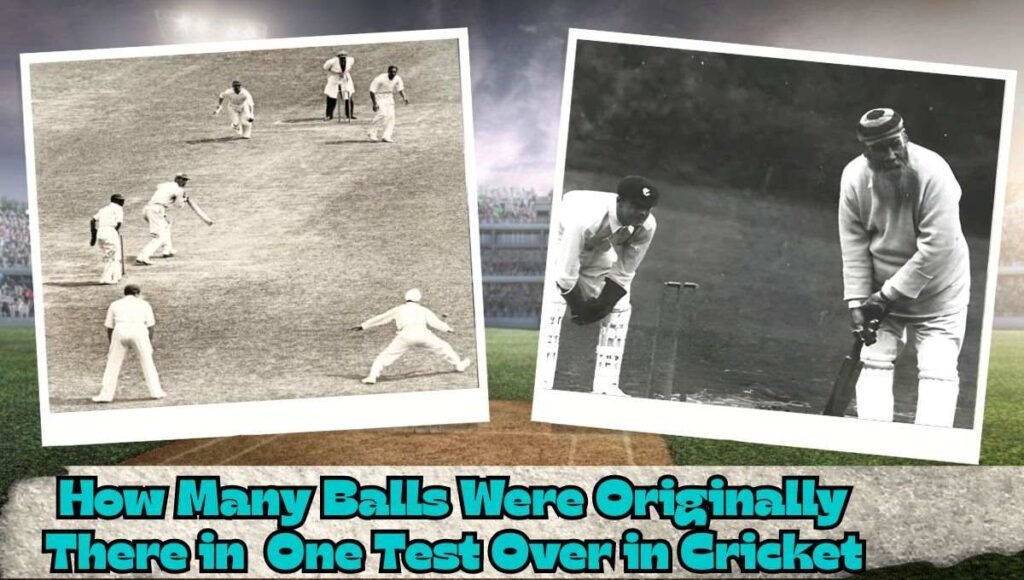
The literal and factual truth of the matter is that one Test over originally was made out of four balls.
During the late 19th century when Test cricket was the order of the day, four-ball overs were the accepted standard. This format was very popular in England and other early cricketing countries. In the course of time, the administrators of cricket tried various over lengths hoping to enhance the performance of the match, minimize the disruptions, and equalize the workload of bowlers. Overs eventually developed to five and then six balls to the over but in some countries up to eight balls to the over before the world standardization took place.
The History of Overs in Test Cricket
In the early days of cricket, the rules to regulate the game were more of convention than a set of strict international rules that were strictly followed. During this time, overs of four balls were mostly used due to the fact that it was suitable to the slower playing rate, and the bowling styles at the time. Ends were changed often which gave captains an opportunity to change bowlers often and control stamina.
Due to the increased popularity of cricket and the lengthening and competitiveness of Test matches, administrators have started to wonder whether four-ball overs were the most effective format of the game.
Transition from Four-Ball to Five-Ball Overs
A major difference was made in 1889 when England experimented with five balls per over. This modification was made in order to make the number of deliveries per over go up a notch without making the game too slow. Although, five-ball overs were also used to some extent, it was never widely accepted by all cricketing countries.
The five-ball over phase is rather a transitional experiment and not a long lasting solution. It was the forerunner of the more stable and balanced six-ball over system.
Introduction of the Six-Ball Over
The number of balls in a single over started to increase to six by the year 1900 making it a choice in various countries. Six ball overs provided a viable balance between the workload of the bowler, the speed of the game and entertainment. This arrangement minimized the number of end changes and a physical manageable demand on bowlers. With the growth of international cricket, six-ball overs continued to increase, and even though it was decades to come full standardization was reached.
The Eight-Ball Over Age in Tests Cricket
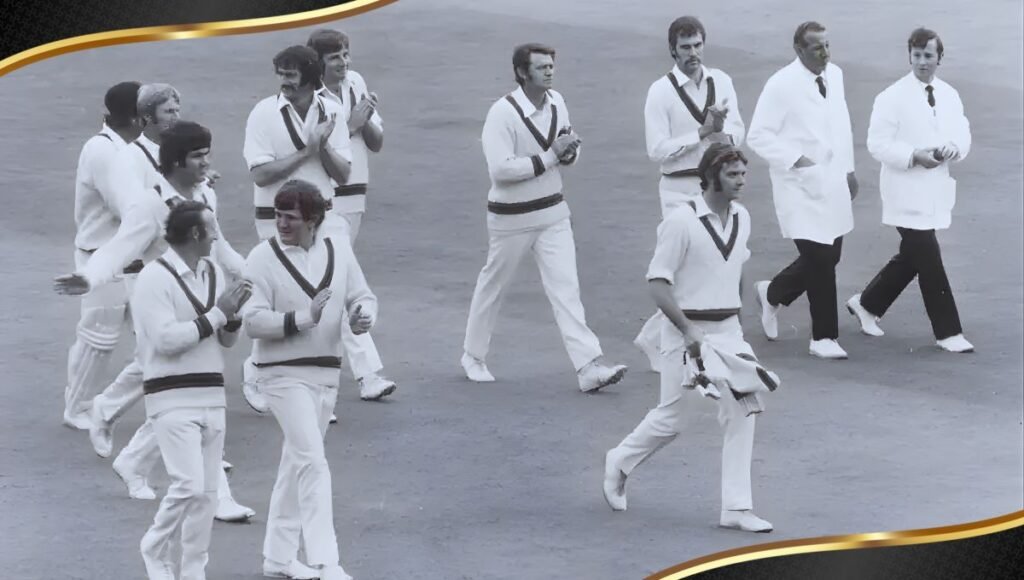
Eight-ball overs were introduced into Test and first-class cricket between the 1930s and the late 1970s by some countries. Australia, South Africa, New Zealand and Pakistan during this time tried longer overs.
Efficiency was the main reason why eight-ball overs were developed. Less overs also translated to less interruption, less swapping of ends and even quicker delivery of daily quotas of deliveries. Nonetheless, this format created more load on bowlers and usually disturbed the rhythm of bowling particularly among the fast bowlers. With the years, the issue of fatigue and consistency of players made the authorities in cricket revisit the eight ball over system.
Timeline of Balls per Over in Test Cricket
The evolution of the over length can be clearly understood through the following table.
| Era / Period | Balls Per Over | Explanation |
| Pre-1889 | 4 | Original Test overs used four balls |
| 1889–1899 | 5 | Experimental phase mainly in England |
| 1900–1930s | 6 | Increasingly adopted worldwide |
| 1930s–1950s | 8 (select nations) | Used in Australia and South Africa |
| 1950s–1979 | 6 or 8 | Mixed usage across countries |
| 1979/80–Present | 6 | Official global standard |
Country-Wise Variations in Balls per Over in Test Cricket
Let’s know the country -wise details of how many balls were originally there in one test over in cricket over the year.
| Country | Period | Balls per Over |
England | 1880–1888 | 4 |
| 1889–1899 | 5 | |
| 1900–1938 | 6 | |
| 1939–1945 | 8 | |
| 1946–Present | 6 | |
Australia | 1876/77–1887/88 | 4 |
| 1891/92–1920/21 | 6 | |
| 1924/25 | 8 | |
| 1928/29–1932/33 | 6 | |
| 1936/37–1978/79 | 8 | |
| 1979/80–Present | 6 | |
South Africa | 1888/89 | 4 |
| 1891/92–1898/99 | 5 | |
| 1902/03–1935/36 | 6 | |
| 1938/39–1957/58 | 8 | |
| 1961/62–Present | 6 | |
New Zealand | 1929/30–1967/68 | 6 |
| 1968/69–1978/79 | 8 | |
| 1979/80–Present | 6 | |
Pakistan | 1954/55–1972/73 | 6 |
| 1974/75–1977/78 | 8 | |
| 1978/79–Present | 6 | |
| India | All Test Matches | 6 |
| West Indies | All Test Matches | 6 |
| Sri Lanka | All Test Matches | 6 |
| Zimbabwe | All Test Matches | 6 |
Reasons Behind Changes in Balls per Over
The development of over length was not a decision that was made by a single decision. The match pacing was important in that the shorter the overs, the higher the number of stoppages and the longer the overs, the fewer the number of interruptions. Bowler work load also played a crucial role as long shifts might make one fatigued particularly among the fast bowlers. Decisions were also determined by entertainment value and scheduling. Cricket boards desired the matches to move on smoothly preserving the interest of the viewers. The culture of local cricket and playing conditions in the country proved to be another reason that caused dissimilarities between countries.
Why did Six-Ball Overs become a global Standard
Towards the end of 1970s, the International Cricket Council realised that there was a requirement to have uniformity in international cricket. Officially standardised six-ball overs had been introduced in all Test matches around the world in the 1979/ 80 season. Six-ball overs were a perfect compromise of performance and welfare of the players. They enabled captains to be more strategic, broadcasters to schedule matches correctly, and bowlers to keep the rhythm without becoming overly tired. The current MCC Laws of Cricket are categorical that an over comprises six legal deliveries excluding wides and no-balls.
Interesting Facts On Overs in Test Cricket
Being officially six balls long, the total number of balls delivered in an over can be larger because of illegal balls including wides and no-balls. Legal deliveries are the only ones that are counted in finishing an over.
The duty of umpires is to count deliveries and in case of miscount, the umpire proceeds with offering the over until he/she announces that umpire is complete. The overs are rare to be more than twenty because of the repetition of no-balls and wides.
Key Facts about Test Over in Cricket
| Aspect | Information |
| Original balls per over | 4 |
| First increase | 5 balls |
| Most common historical length | 6 balls |
| Longest standard over | 8 balls |
| Year of standardization | 1979/80 |
| Current rule | 6 legal balls per over |
How many balls were originally there in one test over? Conclusion
The early traditions of the game give the answer to the question how many balls there were originally there in one Test in cricket. Test cricket originated with four ball over, which was later developed with experiments of five balls and eight balls, and eventually subtracted to six ball over as a universal standard. This development demonstrates the versatility of the game and the determination of the traditions towards realism. This knowledge of history does not only add to the knowledge of cricket but also to the way in which the incidence of the tiniest of rules has influenced the game as it is played today.
FAQs
A1. At its inception, Test over had four balls in the late 19th century.
A2. The widespread use of six-ball overs started in 1900, but it was a global standard in 1979/80.
A3. Yes, Australia, South Africa, New Zealand and Pakistan played with eight-ball overs on some occasions.
A4. The four-ball over was altered to enhance the flow of the match as well as to cut down on frequent change of ends and make the game efficient.
A5. After the MCC Laws of Cricket, each day a Test match is played with six legal balls.
Article Code: HOWMAN-CRI-001
Also Read: New God of Cricket: Who is The Next Legend After Sachin Tendulkar?