
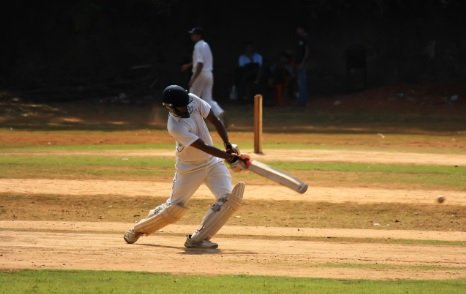
The kind of excitement that Eden Gardens generates is comparable to other forms of high-stakes entertainment, and much like someone spinning a multi hot 5 slot reel online, the tension of not knowing what happens next is precisely what keeps audiences locked in. Cricket here is never just a sporting event. It is an experience that grips an entire city and, on certain occasions, an entire nation.
A Brief History
The stadium takes its name from Emily and Fanny Eden, sisters of Lord Auckland, who served as Governor General of India from 1836 to 1842. Before it was known by its current name, the ground was called Auckland Circus Gardens. The first international match held here was a Test between India and England, played in January 1934.
Two major renovations have transformed the ground over the decades. The first came ahead of the 1987 Cricket World Cup, when capacity was expanded from 40,000 to over one lakh, supported by 42 new structural columns and multi-tiered covered stands.
The second renovation, completed before the 2011 World Cup, reduced capacity to approximately 68,000 to meet ICC safety standards and introduced a new clubhouse, upgraded player facilities, and improved spectator amenities throughout.
Capacity and Layout
Eden Gardens currently holds approximately 68,000 spectators, which makes it the second-largest cricket stadium in India and the third-largest in the world. The playing surface measures 150 metres by 134 metres, with square boundaries of around 66–68 metres and straight boundaries of approximately 76–78 metres. The two ends of the ground are known as the High Court End and the Pavilion End.
The stands are named after cricketers and military figures who have made significant contributions to the nation. Stands bearing the names of Sourav Ganguly, Pankaj Roy, and Jhulan Goswami sit alongside those honouring military heroes such as Havaldar Hangpan Dada and Lieutenant Colonel Dhan Singh Thapa.
Pitch Report
The Eden Gardens pitch is widely regarded as a batter’s surface, particularly in the shorter formats. The outfield is among the fastest in India, and the relatively compact boundary dimensions give batters a clear advantage throughout an innings. Pace bowlers can extract useful bounce early in a match, but spinners tend to grow increasingly dangerous as the game progresses.
In Test cricket, the surface deteriorates considerably by the fourth and fifth days, often shifting the contest decisively in favour of slow bowling. High scores are common at this ground, and it has produced some of the biggest individual innings in the entire history of the sport.
Records and Memorable Performances

Batting Records
Rohit Sharma holds the highest individual ODI score anywhere in the world, having hit 264 against Sri Lanka at this ground in November 2014. That record still stands today.
Bowling Records
Harbhajan Singh took a hat-trick against Australia in the famous 2001 Test match and became the first Indian bowler to achieve the feat in Test cricket. Kuldeep Yadav then repeated the achievement in a different format, as he took a hat-trick against Australia in an ODI at the same ground in September 2017.
Iconic Matches
Eden Gardens became only the second venue in the world to host a Cricket World Cup final when Australia defeated England in the 1987 Reliance World Cup. The 2001 Border-Gavaskar Test remains the most celebrated match in the ground’s history, with India overcoming a follow-on deficit to defeat an Australian side that had won 16 consecutive Tests. VVS Laxman scored 281, and Rahul Dravid contributed 180 in a partnership that lasted the better part of two days.
The 2016 ICC World Twenty20 Final then produced one of the most dramatic finishes in the format’s history, with Carlos Brathwaite hitting four consecutive sixes off Ben Stokes to hand West Indies the title off the very last delivery.
Also Read: The MI London cricket team